The numbers
People in regional and remote communities
7 million people, or 27% of the population in Australia, live in regional and remote areas.
A greater proportion of people living in regional and remote areas report having a disability than people living in cities.
People living in very remote areas are hospitalised at almost twice the rate of people living in major cities. People living in remote areas are hospitalised at 1.3 times the rate. For preventable hospitalisations, the rates are 2.8 times as high for people in very remote areas, and 1.8 times as high for people in remote areas, as compared to people in major cities.
The rate of family and domestic violence hospitalisations for people living in very remote areas is 41 times higher than for people living in major cities. 23% of women living outside major cities have experienced partner violence compared to 15% of women living in major cities.
Community legal centres in regional and remote communities
According to our most recent State of the Sector survey…
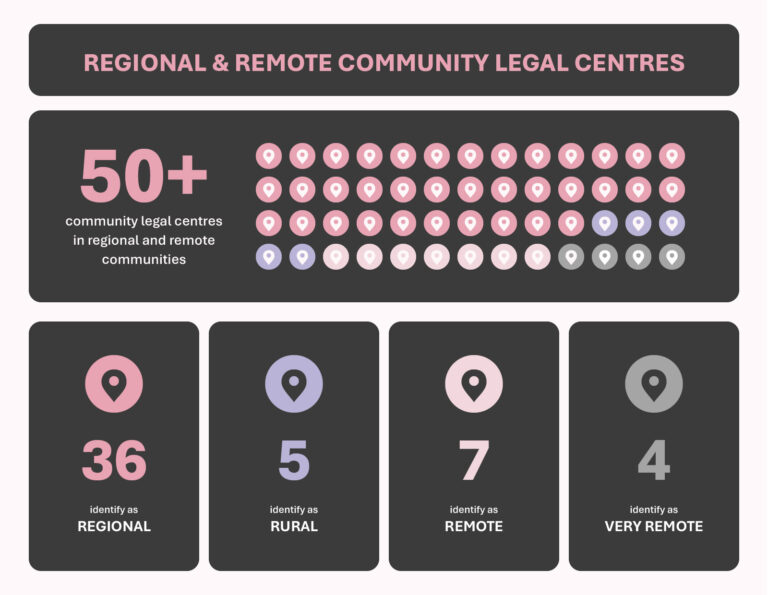
About 80% of the regional and remote centres in our membership are ‘generalist’ centres, assisting people in their local area with a broad range of legal and related problems.
About 20% are specialist centres, which help people in a particular area of law, or help people from a particular demographic group.
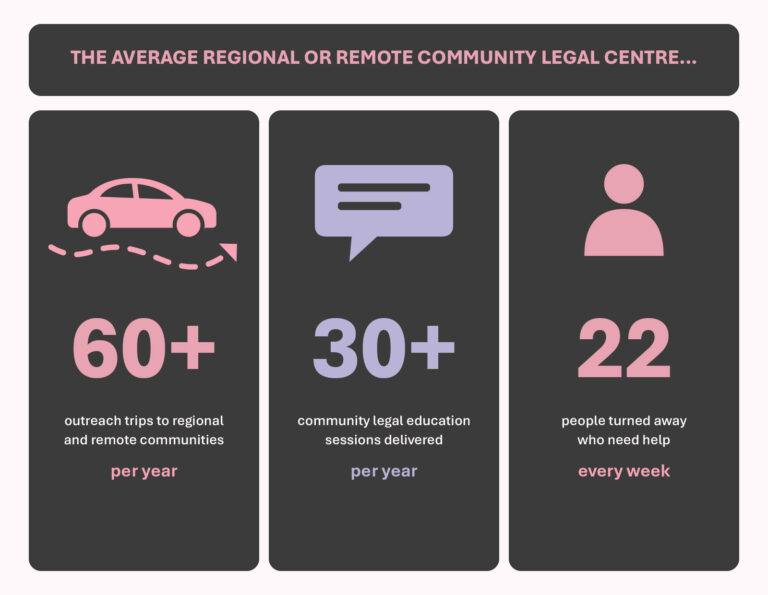
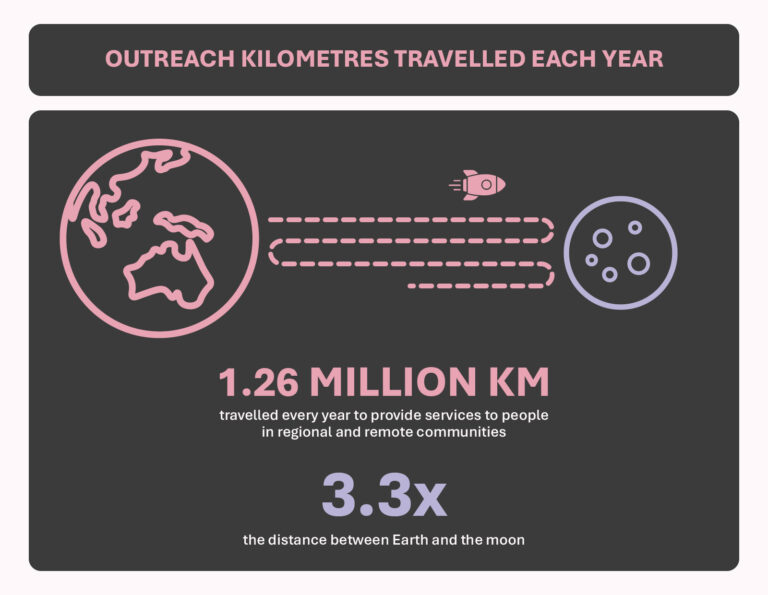
Collectively, community legal centres travel 1.26 million km a year to reach people in regional and remote communities.
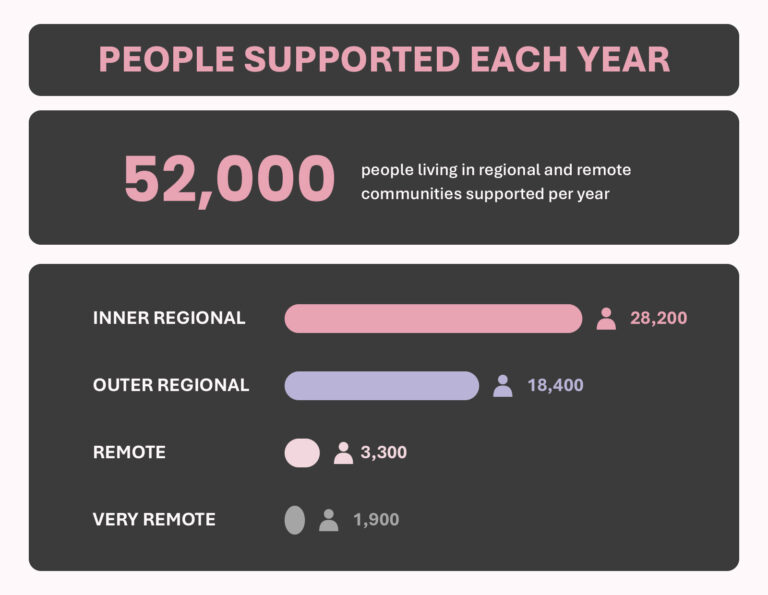
People we support
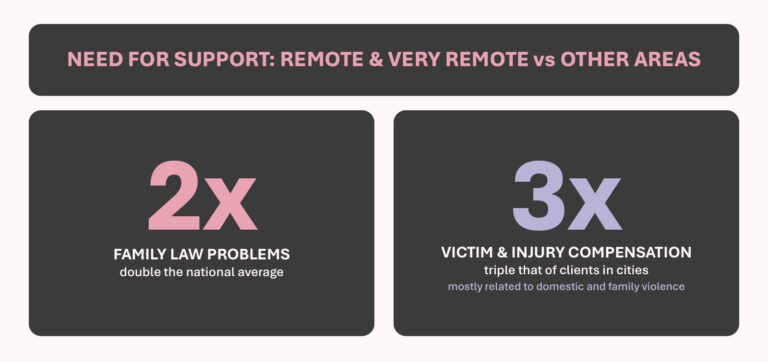
The top five most common things community legal centres help people living in regional and remote communities with are:
- Domestic and family violence and domestic violence protection orders
- Parenting arrangements
- Other civil law problems
- Housing
- Victim and injury compensation.
Our workforce
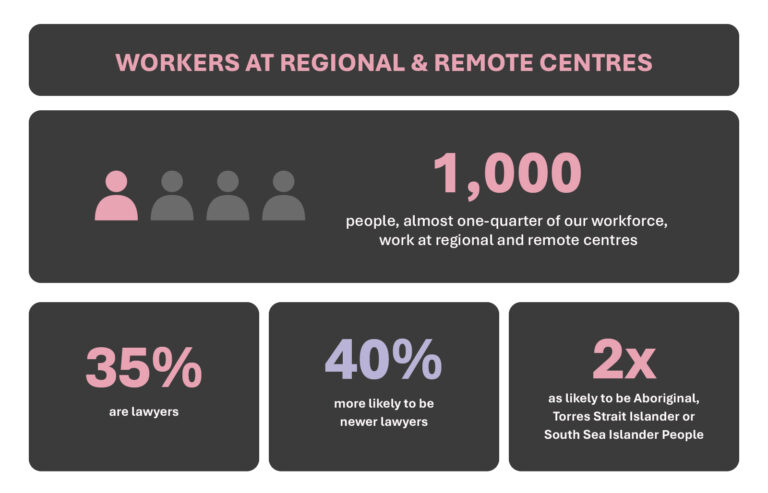
Around 1,000 people work at regional and remote community legal centres.
Over 4 in 5 are women and nonbinary people.
Workers at regional and remote community legal centres are almost twice as likely to be Aboriginal, Torres Strait Islander or South Sea Islander people than workers at metropolitan centres.
Over half of regional and remote community legal workers hold a Legal Practising Certificate. Lawyers make up 35% of the regional and remote community legal centre workforce. Most other Legal Practising Certificate holders are in leadership roles, like Principal Solicitor or CEO.
1 in 11 are allied professional workers, like social workers, financial counsellors and tenant advocates. Another 1 in 11 are in legal support roles, like paralegals.
Workers at regional and remote centres who hold a Legal Practising Certificate are over 40% more likely than those at metropolitan centres to have held their certificate for under two years.